
Water 101 · 9 min read
Distilled vs. reverse osmosis: which is better for drinking water?
By Mick Preston, Co-founder · Published · Updated

For drinking water, neither one wins across the board. Both take out fluoride, nitrate, sodium and the calcium and magnesium in your water.[3][4] Reverse osmosis makes more water with less effort, typically 10 to 35 gallons a day into a tank, but a typical point-of-use unit sends five gallons or more down the drain per gallon made.[4][1] A batch distiller makes 3 to 10 gallons a day, runs on electricity and needs its boiling chamber descaled.[3] If you want minerals in your glass, neither one leaves them there.
Distilled and reverse osmosis water end up in a similar place: low in minerals and in most of what was dissolved in the tap. They come from different machines that cost you different things. One burns electricity to boil water; the other sends water down the drain to keep its membrane clean.
How each one makes water
Distillation is the old method. A distiller heats water until it turns to steam. The steam cools, condenses back to a liquid and flows into a storage container, while minerals and other solids stay behind in the boiling chamber.[3] The water you drink is made from the steam, not from the tank you started with.
Reverse osmosis doesn't use heat. Household water pressure pushes water through a membrane fine enough to hold back most dissolved substances. What passes through goes to a storage tank. What the membrane rejects is flushed to the drain.[4] EPA WaterSense states that "a typical point-of-use RO system will generate five gallons or more of reject water for every gallon of treated water produced," and that WaterSense-labeled systems must send 2.3 gallons or less to the drain per gallon produced.[1]
Distilled vs. RO, side by side
| Distillation | Reverse osmosis | |
|---|---|---|
| How it works | Boils water, collects the condensed steam | Pushes water through a membrane |
| Typical output | 3 to 10 gallons a day for batch units [3] | 10 to 35 gallons a day for a household membrane [4] |
| Water sent down the drain | Varies by unit; see its spec sheet | Five gallons or more per gallon made for a typical system; 2.3 or less for WaterSense-labeled units [1] |
| Energy | Electricity to boil water is the main operating cost [3] | Household water pressure does the pushing [4] |
| Fluoride | Removes most of it [5] | Removes most of it [5] |
| Minerals in the finished water | Depleted [2][3] | Depleted unless a remineralizer is added [2][4] |
| Volatile chemicals | Ones that boil near water's temperature, such as benzene and toluene, can carry over unless another step removes them first [3] | Carbon pre- and post-filters handle chlorine and certain organic chemicals the membrane is weaker on [4] |
| Typical upkeep | Clean scale out of the boiling chamber [3] | Replace pre- and post-filters; replace a clogged or torn membrane [4] |
| Third-party standard | Check the unit's own certification listing | NSF/ANSI 58 applies to RO; fluoride is an optional claim [6] |
What each one removes and what it leaves
On the dissolved minerals, the two methods land in the same spot. The World Health Organization's review of nutrients in drinking water notes that desalination, "either by flash evaporation or reverse osmosis, depletes the source water of its mineral contents."[2] Flash evaporation is a form of distillation. Same outcome, two routes.
Fluoride follows the same pattern. The American Dental Association says reverse osmosis systems and distillation units remove most of the fluoride when they're working properly.[5] University of Nebraska–Lincoln Extension guides list nitrate, sodium, lead, iron and manganese among what each method removes.[3][4] More in how to remove fluoride from water and does reverse osmosis remove fluoride?
The differences show up at the edges. Volatile chemicals that boil near water's temperature can ride the steam into a distiller's finished water unless another process removes them first.[3] RO membranes are weaker on chlorine and some organic chemicals, which is why RO systems pair them with carbon filters.[4] Microbes split the two as well. The Nebraska distillation guide says a properly operated distiller inactivates bacteria, viruses and protozoan cysts, while the RO guide recommends feeding an RO unit only coliform-free water.[3][4]
Under FDA bottled-water regulations, "distilled water" and "reverse osmosis water" are both names a bottler may use for purified water made by that process.[7]
Taste, cost, effort and energy
Taste. People often describe distilled water as flat or bland, and the Nebraska guide puts that down to the removal of some oxygen and trace metals.[3] RO water, stripped of most minerals, can taste flat too; see reverse osmosis water side effects and reverse osmosis with remineralization.
Energy. A distiller's biggest operating cost is the electricity to make steam. The Nebraska guide's example, an 1,100-watt unit running three hours per gallon at the $0.10 per kilowatt-hour rate the 2013 guide used, comes to about 33 cents a gallon.[3] Run the numbers with your unit's wattage and your electric rate. RO runs on the pressure in your pipes and pays in water instead.
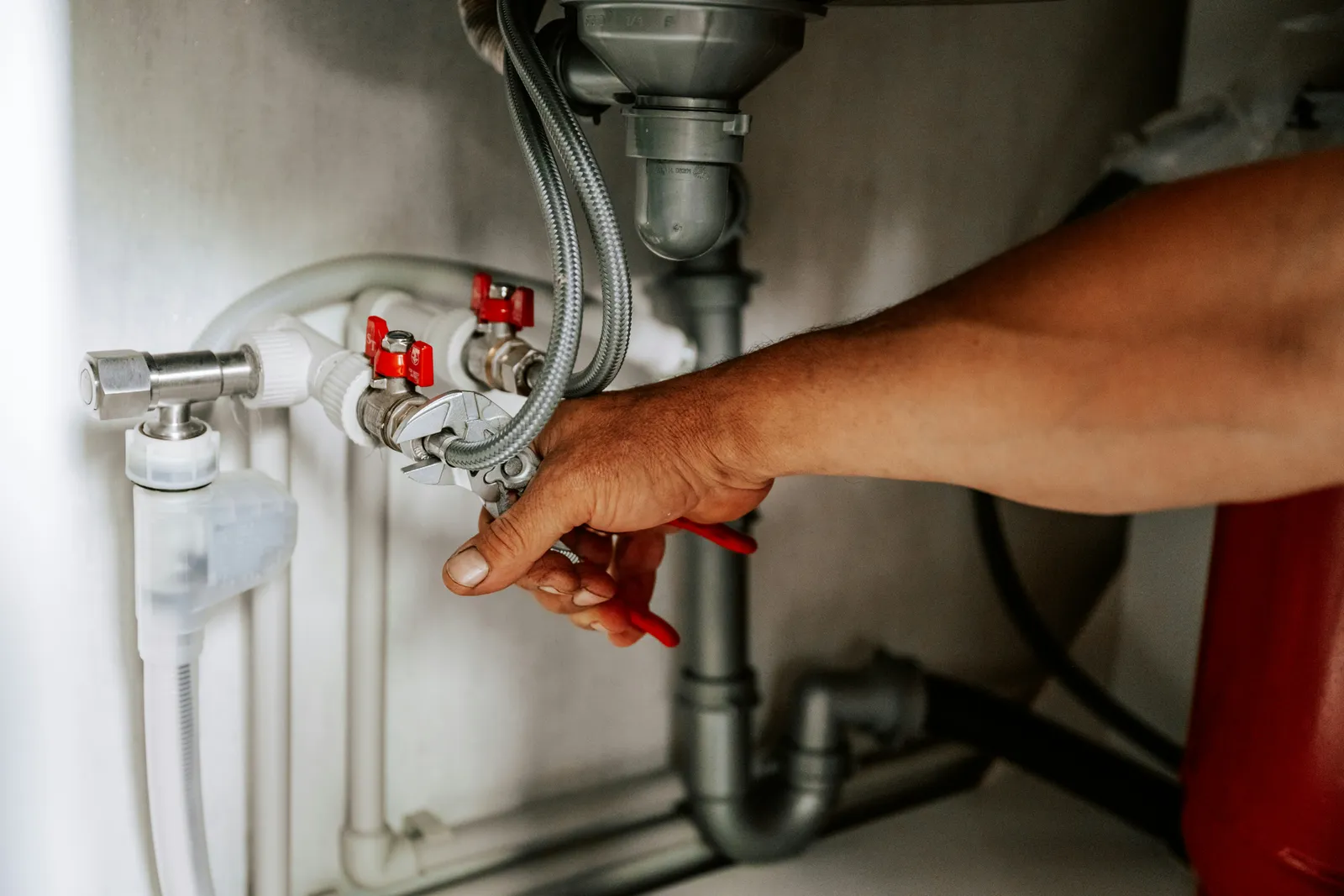
Effort. A batch distiller means filling it, waiting, and cleaning scale out of the boiling chamber.[3] RO fills its own tank but adds a drain connection, a separate faucet and a filter calendar, and on a septic system its wastewater adds load.[4]
Storing distilled and RO water
Distilled water should be stored under sanitary conditions to prevent recontamination, and the Nebraska guide recommends glass or stainless steel containers.[3] An RO system stores its own water in a pressurized tank, generally 2 to 5 gallons, that feeds the faucet. RO water can be more corrosive than untreated water, so RO systems are installed with their own plumbing and faucet.[4]
Where spring water fits
Spring water is a different kind of label. Under FDA rules, "spring water" names where the water came from, an underground formation from which water flows naturally to the surface, while "distilled water" and "reverse osmosis water" name how it was treated.[7] What's dissolved in a spring water depends on the spring, so the label or the bottler is the only way to know its minerals and fluoride. CDC notes that bottled water labeled de-ionized, purified, demineralized or distilled contains no or only trace amounts of fluoride.[8]
So the real comparison is water someone else sourced and bottled against your own tap water, treated at your own sink.
Which one fits your home
Pull your utility's Consumer Confidence Report or test your well, then match the machine to the job.
- You need more than a few gallons a day for drinking and cooking. A household RO membrane's 10 to 35 gallons a day is a better fit than a distiller's 3 to 10.[3][4]
- Your water carries volatile chemicals. A distiller needs a step that removes them before the steam condenses; an RO system relies on its carbon filters.[3][4]
- You want minerals in your glass. Neither keeps them. Some RO owners add a remineralization stage; distilled water stays low-mineral.
We sell filters, so weigh this accordingly. If your concerns are the usual city-water ones, a catalytic-carbon multi-stage system is a third option. The Sentry H2O Wellness System is not an RO or distillation system. It sits under the sink, sends no reject water to the drain, and its AlkaGuard stage is designed to add calcium and magnesium back; in the 2025 Tempe, Arizona samples on our Science page, pH went from 6.83 untreated to 8.21 in the "Treated Sink" sample. We weigh the two approaches, including the rows where RO leads, in reverse osmosis vs. carbon filtration and our Sentry H2O vs. reverse osmosis comparison.
About these samples (provisional): Sentry H2O's draft, not-yet-final answers describe the 2025 "Treated Sink" sample as a TriGuard under-sink system at the 500-gallon mark and the "Kitchen Sink" sample as a whole-house system at about 100,000 gallons (roughly one year for a family of three). Sentry has not yet supplied the per-report sample crosswalk, so we do not attribute these results to any current SKU. Results are specific to the sampled water and configuration and are not a certification or a guarantee of identical performance in every water source.
Free one-page checklist
Is your filter doing what you think?
A printable page: what each filter type is documented to reduce, five questions to ask a seller, and where to confirm a certification yourself. No email needed.
Frequently asked questions
Is distilled water the same as reverse osmosis water?
No. Distillation boils water and collects the steam. Reverse osmosis pushes water through a membrane. Both leave the finished water low in minerals, but they are different machines with different upkeep, and neither is a drop-in swap for the other.
Which is better, distilled or reverse osmosis?
Neither wins across the board. Reverse osmosis makes more water with less effort and sends reject water to the drain, while a distiller runs on electricity and makes a few gallons a day. Start with your utility's annual Consumer Confidence Report or a lab test, then match the method to the result.
Sources
[1] U.S. EPA WaterSense, Point-of-Use Reverse Osmosis Systems: the reject-to-product figures quoted above.
[2] World Health Organization, Nutrients in Drinking Water (Geneva: WHO Press, 2005), p. 76: desalination and mineral depletion.
[3] Bruce I. Dvorak and Sharon O. Skipton, Drinking Water Treatment: Distillation, NebGuide G1493, University of Nebraska–Lincoln Extension (revised 2013).
[4] Bruce I. Dvorak and Sharon O. Skipton, Drinking Water Treatment: Reverse Osmosis, NebGuide G1490, University of Nebraska–Lincoln Extension (revised 2014).
[5] American Dental Association, Fluoridation Facts (2025), Question 16, p. 35: home water treatment systems and fluoride.
[6] NSF, NSF/ANSI 58: Reverse Osmosis Drinking Water Treatment Systems: required and optional claims.
[7] U.S. Food and Drug Administration, 21 CFR 165.110, Bottled water: definitions of spring water and purified water.
[8] CDC, Community Water Fluoridation Frequently Asked Questions: fluoride in bottled water.
Keep reading
Educational guidance only, not medical advice. This article compares water-treatment methods and cites published guidance from the U.S. EPA, the FDA, CDC, the World Health Organization, the American Dental Association, NSF and University of Nebraska–Lincoln Extension. It does not describe health outcomes for any individual, and no water filtration system prevents, treats, or cures any disease.